Gut & Digestive Health
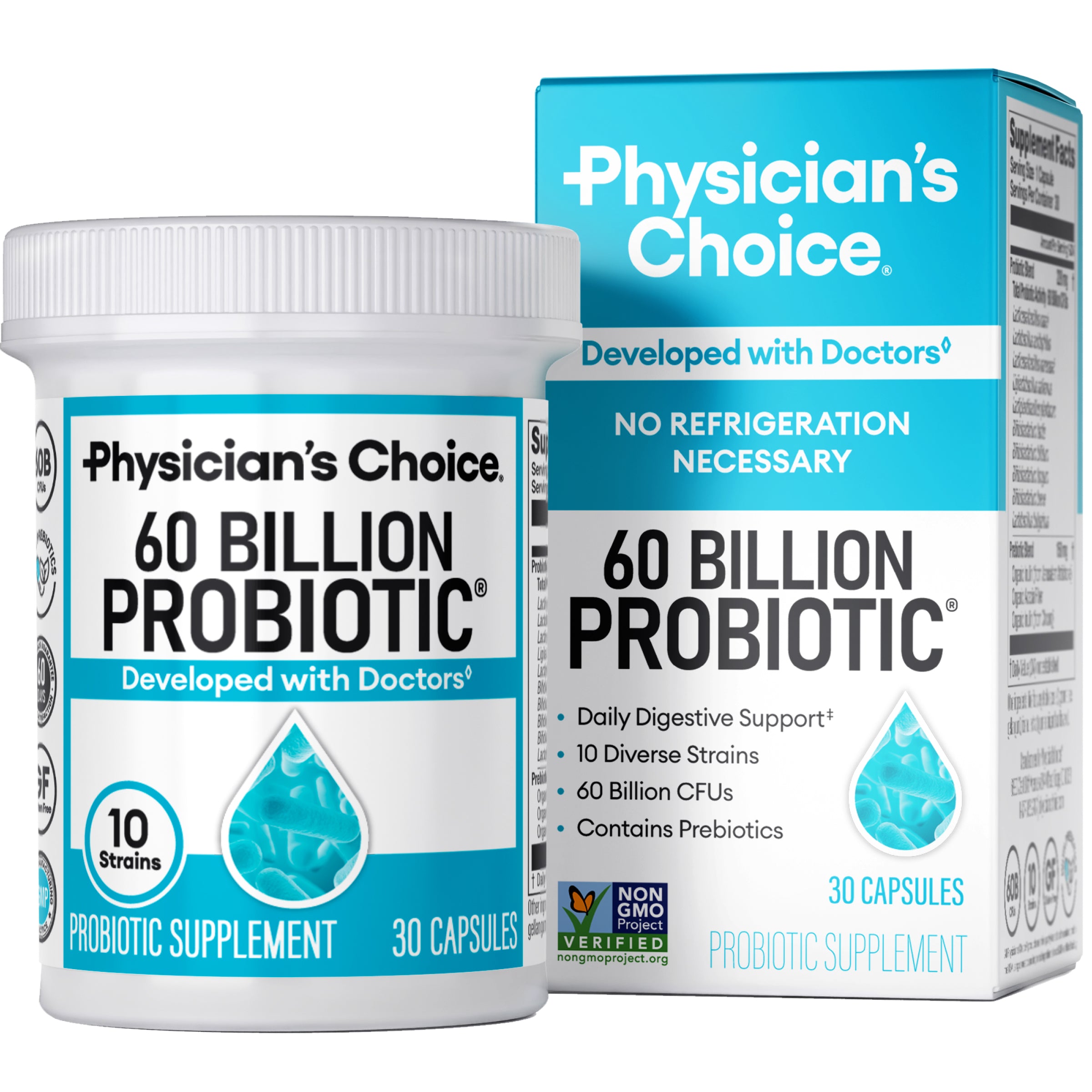
Physician's Choice Probiotics 60 Billion CFU
One of Amazon's best-selling probiotics, from a fast-growing DTC brand founded in 2017 — a modern company, not a legacy manufacturer.
60 Billion CFU10 StrainsDelayed-Release Capsule
We have not independently lab-tested this product ourselves. This product was included in ConsumerLab's probiotic-category testing program; the specific pass/fail result sits behind ConsumerLab's paywall, so we can't confirm the exact outcome here.
We link to Amazon and may earn a commission from qualifying purchases at no extra cost to you
Label Check
Testing claimBrand states every batch is third-party tested for purity/potency
Other certificationNon-GMO Project Verified
CompanyFounded 2017, Wheat Ridge, CO — a modern DTC brand
Where to buy
A genuinely popular, modern probiotic brand — worth knowing it's a newer company rather than a decades-old manufacturer before you weigh that against the price.
See it on Amazon →
As an Amazon Associate, we earn from qualifying purchases.
What it's marketed for
The brand markets this product as supporting "healthy digestion and regularity," helping "ease occasional bloating, gas, and discomfort," and supporting "immune health through a balanced gut microbiome" — framing around common, self-limiting digestive experiences rather than any diagnosed disease.
What we found
A real, if young, company
Physician's Choice was founded in 2017 by Logan Chierotti and Ryan Russo in Wheat Ridge, Colorado, and has grown into one of Amazon's best-selling probiotics. That's a real, fast-growing DTC brand — not an anonymous seller — but it's worth being accurate that this is a modern startup, not a legacy pharmaceutical manufacturer like some other products on this list.
Live organisms carry a real, specific caution
Probiotic supplements contain live microorganisms, and general medical guidance flags a documented infection risk for immunocompromised individuals — chemotherapy patients, organ transplant recipients, and people with central-line catheters, among others — who are generally advised to consult a doctor before taking any probiotic, not just this one.
Worth knowing: if you're immunocompromised or have a serious underlying health condition, check with a doctor before starting any probiotic, including this one. These statements have not been evaluated by the FDA. This product is not intended to diagnose, treat, cure, or prevent any disease. Consult a healthcare provider before starting any new supplement, especially if you take medication or have a health condition.